§ 01Research

Research

Astrophysics research at UCSB is based in the Physics Department. It includes experimental work on the cosmic microwave background, observational work at the W. M. Keck Observatory on Maunakea, and theoretical work in all parts of astrophysics. The group works closely with the Kavli Institute for Theoretical Physics on campus and with Las Cumbres Observatory, headquartered a few miles away in Goleta.

faculty
11
refereed papers in 2026 so farNASA ADS, 2026-10-08
116
Keck telescopes on Maunakea, via the UC share
2 × 10 m
global robotic telescope network next door (LCO)
1

Fig. 1

Where in the universe we work

Fig. 1 | Where in the universe we work. a, Each row spans the light travel distances of the objects one faculty member studies, on a logarithmic axis from the Solar System to the cosmic microwave background (CMB). The top axis gives the same quantity as lookback time, since light travel distance is c times lookback time. Bar colors give research themes, and a bar drawn in two colors belongs to two themes. Dotted lines mark the Sun (8.3 light minutes), Proxima Centauri (4.24 ly), the Crab Nebula (~6,500 ly), the Galactic Center (~26,000 ly), Andromeda (2.5 Mly), M101 and SN 2011fe (~21 Mly), the Virgo Cluster (~54 Mly), the first quasars (~13 Gly) and the CMB (13.8 Gly). b, The bracketed range of a on a linear lookback time axis, with redshift z on the top axis for flat ΛCDM with Planck 2018 parameters (H0 = 67.66 km s−1Mpc−1, Ωm = 0.3111, age 13.79 Gyr). Ranges are approximate. Hover over or focus a row to see research areas, and select it to open that person's page.

§ 02Themes

Research themes

Each theme has a page with its faculty, the objects on the sky tied to its work, recent papers and related news.

01 / 06

Exoplanets & instruments

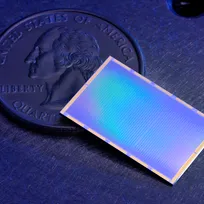
Direct imaging and spectroscopy of young giant planets and brown dwarfs, the orbital architecture of planetary systems, and the detectors and polarimeters that make the measurements possible, including superconducting MKID cameras built on campus.
Faculty
Brendan Bowler, Ben Mazin, Max Millar-Blanchaer
Emeritus
Stanton J. Peale
Targets on the sky map
14 Her b · AB Aur · β Pictoris · HD 109573 · HD 143811 AB b · HIP 65426 · HIP 93398 B · HR 2562 B · TWA 7 · VHS 1256-1257 b

02 / 06

Stars, explosions & transients

How stars live and die: stellar pulsations, accreting white dwarfs, thermonuclear flashes, and the supernovae, kilonovae and tidal disruption events caught by the Las Cumbres Observatory robotic network.

Faculty
Lars Bildsten, Andy Howell
Targets on the sky map
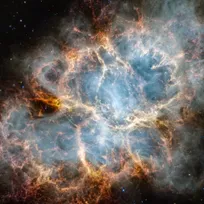
Crab Nebula & Pulsar · SN 2012Z · SN 2017cbv · SN 2017gmr · SN 2021aefx · SN 2021yja · SN 2023ixf

04 / 06

Galaxies & the gas around them

Star formation and the galactic winds it drives, the circumgalactic medium, multiphase and turbulent plasmas, cosmic rays, galaxy clusters, and dusty star forming galaxies in the early universe.

Faculty
Caitlin Casey, Crystal Martin, S. Peng Oh
Targets on the sky map
A1835 · ACO 262 · CGCG 007-025 · COSMOS field · J1044+0353 · M 82 · PKS 0745-191 · RX J0820.9+0752 · SBS 0335-052 E · UNCOVER DR2 46803

05 / 06

Cosmic dawn

The first quasars and galaxies, the intergalactic medium, and the epoch of reionization, using the largest sky surveys, JWST, 21 cm cosmology and machine learning emulators.

Faculty
Caitlin Casey, Joseph Hennawi, Crystal Martin, Tejaswi Venumadhav
Targets on the sky map
J0100+2802 · J0252-0503 · PSO J158.6937-14.4210 · QSO J0305-3150 · QSO J0313-1806 · QSO J0910-0414 · QSO J1007+2115 · QSO J1120+0641 · QSO J1129+1846 · ULAS J1342+0928

06 / 06

Experimental cosmology

The cosmic microwave background, directed energy propulsion for interstellar probes, and planetary defense against asteroids and comets.

Faculty
Philip Lubin
Targets on the sky map
Proxima Centauri